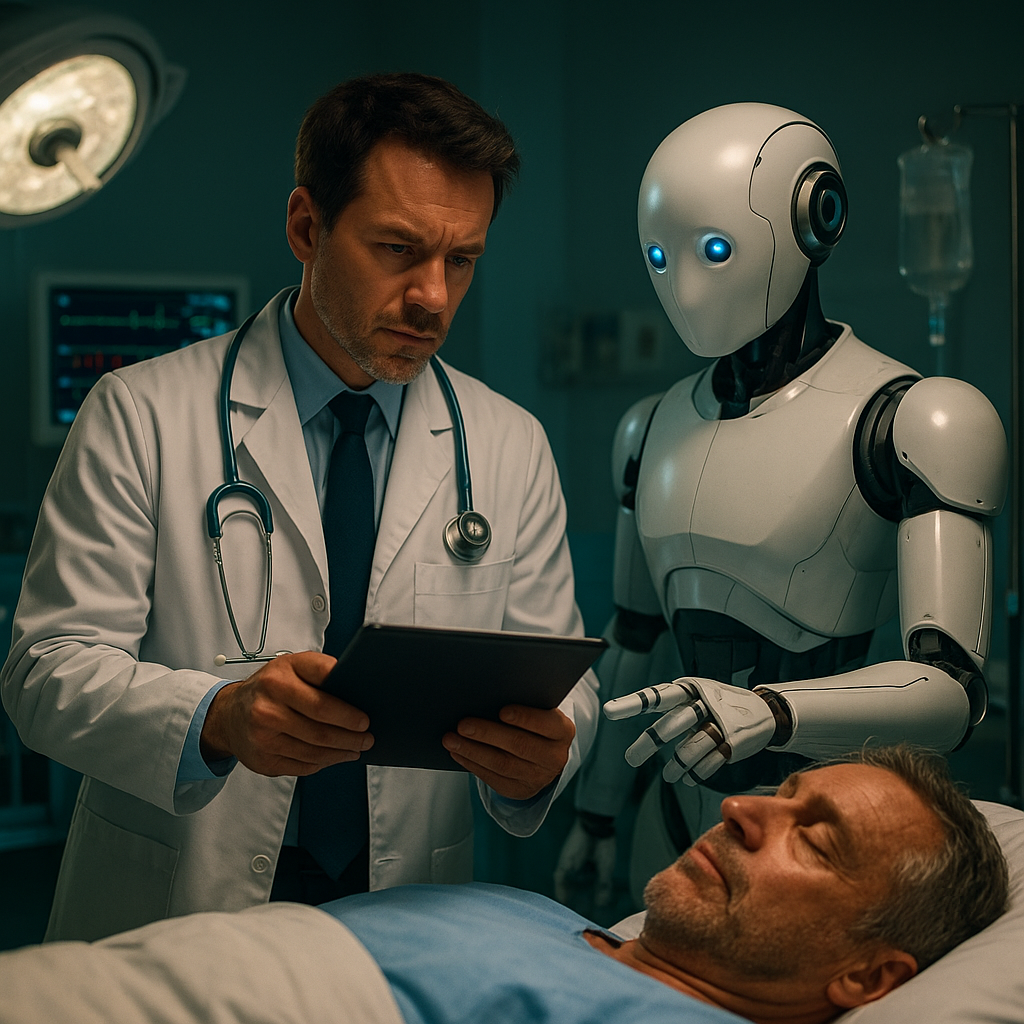
AI Outperforms Human Doctors in Emergency Room Diagnoses: A Harvard Study
Could artificial intelligence revolutionize healthcare by providing faster, more accurate diagnoses than human doctors?
A recent Harvard study demonstrated that AI systems surpassed two human emergency room physicians in diagnostic accuracy. What does this mean for the future of patient care, and how soon might AI redefine medical practice? Let’s explore the facts and implications of this groundbreaking development.
Harvard Study Details: The AI Advantage
Conducted by researchers at Harvard, the study compared the diagnostic capabilities of an AI system to those of two human physicians, specifically in emergency room scenarios. The AI was tasked with analyzing patient symptoms, medical history, and test results to determine accurate diagnoses.
What sets AI apart, according to the study, is its ability to efficiently process vast amounts of data at unprecedented speed. While human doctors rely on experience and pattern recognition, the AI system employs advanced machine learning algorithms to scrutinize each detail, ensuring consistent accuracy. To everyone’s surprise, the AI proved to be more reliable than the two physicians, managing to identify medical conditions with greater precision.
Understanding How AI Beats Human Diagnoses
1. The Role of Data Analysis
At the core of AI’s success is its capability for meticulous data analysis. By evaluating millions of medical records and studies in seconds, AI can cross-reference symptoms to detect rare conditions that might not immediately come to a doctor’s mind. For example, AI has demonstrated success in diagnosing conditions such as sepsis or rare genetic disorders with higher accuracy than human practitioners.
2. Machine Learning and Continuous Improvement
Unlike human experts, AI systems are designed to learn from their errors. Each diagnosis contributes to an ever-expanding database, allowing constant fine-tuning of its algorithms. This kind of iterative learning means that AI becomes smarter over time, which translates to greater accuracy in future diagnoses.
3. Reducing Human Error
Physicians are prone to fatigue and cognitive bias, especially in high-pressure environments like emergency rooms. AI, on the other hand, operates without such limitations, ensuring consistency even in cases involving complex or abstract symptoms.
Challenges in Adopting AI for Healthcare
While the findings of the Harvard study are promising, the integration of AI into healthcare systems is not without challenges. Here are a few key barriers that experts highlight:
- Data Privacy Concerns: Handling vast amounts of sensitive patient data raises significant ethical and legal questions about privacy and security.
- Lack of Standardization: Diverse healthcare systems globally lack compatibility, making it difficult to implement universal AI solutions.
- Trust in AI Systems: Despite evidence of superior accuracy, many healthcare providers remain hesitant to rely on AI due to the fear of technological failure or malpractice lawsuits.
Overcoming these barriers will require collaboration among technologists, medical practitioners, and regulatory bodies to ensure that AI solutions are both safe and accessible.
What This Means for the Future of Medicine
The success of AI in emergency room diagnoses is just the beginning. With further development, AI could play a pivotal role in many other areas of medicine, including:
- Remote Diagnostics: AI systems could empower remote areas to access world-class healthcare, bridging gaps in medical inequality.
- Predictive Medicine: AI technologies could monitor patient health trends to predict and prevent illnesses before symptoms even arise.
- Resource Optimization: Hospitals could optimize medical resource allocation, reducing both operational costs and treatment wait times.
How to Prepare for an AI-Driven Healthcare Era
As AI continues to make its mark in medicine, stakeholders across the healthcare industry must adapt. Clinicians will need specialized training to effectively interact with AI systems. Additionally, hospitals should invest in IT infrastructure to support these innovations without disrupting patient care.
It’s also crucial for patients to stay informed about how AI shapes their diagnoses and treatment plans. Building public awareness can help overcome skepticism and encourage smoother adoption of AI technologies in healthcare settings.
For more insights into how technology is transforming healthcare, explore our latest articles on emerging technologies.
Want to stay ahead in the world of AI? Subscribe to our newsletter for regular updates and expert analyses.
Conclusion
The Harvard study reveals a bold future where AI not only complements but possibly surpasses human capabilities in healthcare. While questions about ethics, privacy, and its role alongside doctors remain, the potential benefits are undeniable. Faster, more precise diagnoses mean better outcomes for patients, fewer cases of medical malpractice, and optimized healthcare systems.
As we embrace this new era, it’s critical to address the challenges and ensure that AI serves as a guide rather than a replacement for human expertise. Will AI become the cornerstone of modern medicine? The journey has only just begun, and it’s bound to shape the future of healthcare in ways we can only imagine today.
No responses yet