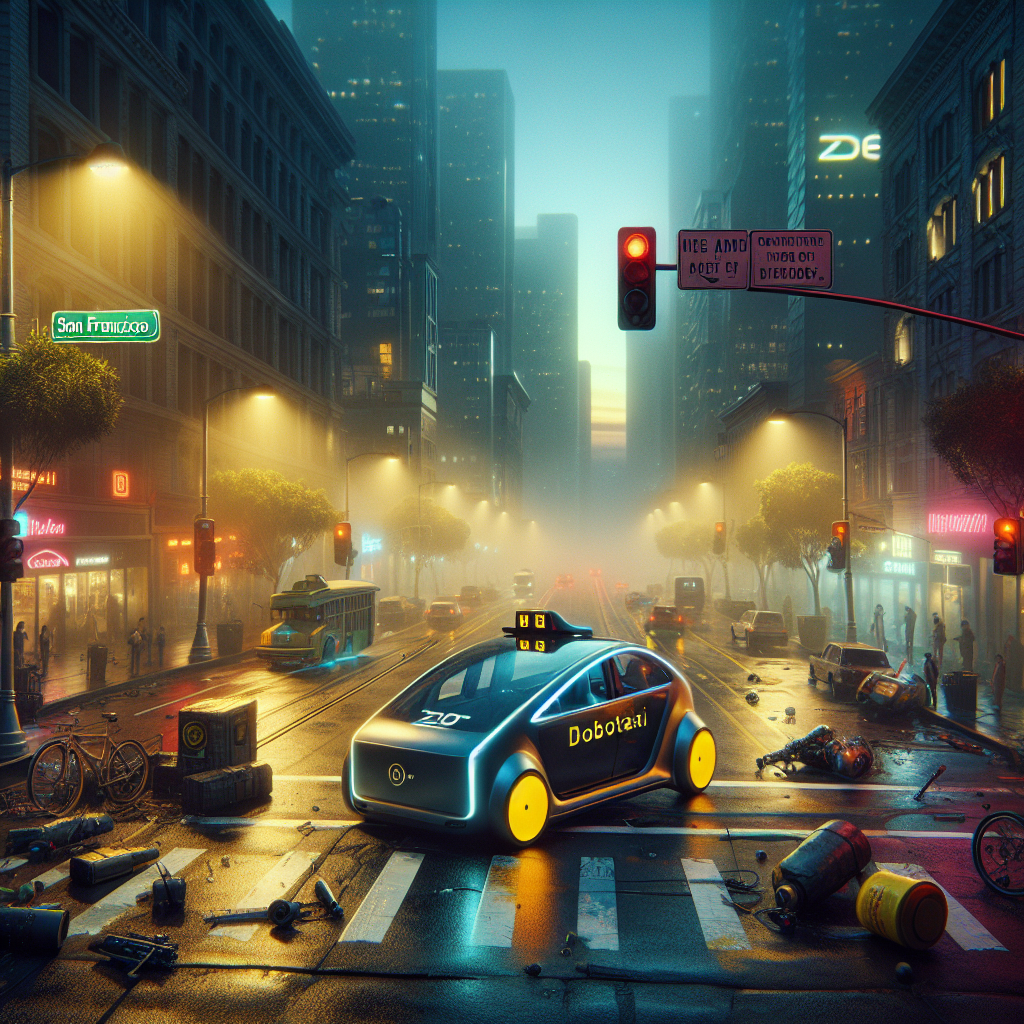
Waymo Suspends Service in San Francisco: What the Blackout Incident Tells Us About Robotaxi Technology
Why Did Waymo Temporarily Suspend Its Robotaxi Service?
Imagine a city bustling with autonomous vehicles, only for everything to grind to a halt during a sudden power outage. This is precisely what happened in San Francisco recently, sparking questions about the readiness of self-driving technology for real-world challenges. Waymo, Alphabet Inc.’s autonomous driving subsidiary, found itself facing an unprecedented dilemma.
On December 21, Waymo announced it was suspending its robotaxi services across San Francisco. The decision came after numerous self-driving cars stalled on the streets during a power outage, leaving customers and local traffic disrupted. But what does this incident reveal about the maturity and limitations of autonomous vehicles?
What Happened During the San Francisco Blackout?
San Francisco experienced a large-scale blackout that impacted several neighborhoods and businesses. Notably, Waymo’s fleet of autonomous vehicles appeared particularly vulnerable during this event. Reports indicated that multiple Waymo robotaxis stalled mid-course, unable to navigate efficiently without stable infrastructure connectivity—specifically, access to critical cloud servers for real-time decision-making.
This operational disruption created traffic challenges and stranded passengers caught unaware of the situation. According to a statement released by Waymo, the vehicles’ inability to reconcile routing data due to the limited network access directly resulted in the service breakdown.
While power was restored relatively quickly to most areas, the incident underscored the complex dependency autonomous vehicles have on external systems like mobile networks and cloud computing.
Understanding the Technical Challenges of Autonomous Vehicles
Connectivity Dependence
Modern robotaxi fleets like Waymo rely heavily on a constant flow of data between the vehicle’s sensors, onboard computer, and cloud infrastructure. While the cars themselves are equipped with some level of redundancy, core decision-making still often requires real-time updates facilitated via an uninterrupted internet connection.
Infrastructure Resilience
This event also raises questions about the robustness of urban infrastructure to support emerging technologies. Unlike human drivers, who can adjust quickly during outages like malfunctioning traffic lights, autonomous vehicles rely on connected systems to handle such anomalies.
Public Safety Concerns
Though no injuries were reported during this incident, stranded vehicles pose a potential safety hazard. They could obstruct critical routes for first responders during emergencies or create confusion for surrounding drivers and pedestrians.
How Waymo and the Autonomous Vehicle Industry Can Improve
This incident offers an important opportunity for tech companies and city planners to collaborate on making autonomous systems more resilient. Here are some areas worth exploring:
- Edge Computing: Empower vehicles to process more decisions locally without constant reliance on cloud connectivity.
- Redundant Systems: Equip cars with enhanced offline capabilities to operate in emergencies such as blackouts.
- Stronger Urban Infrastructure: Governments and local planners must invest in creating an ecosystem capable of supporting connected technologies even during disruptive events.
Companies like Cruise and Tesla, which also operate autonomous fleets, are likely to learn from this incident to ensure higher fault tolerance across their systems.
Resuming Services: Waymo’s Response and Next Steps
In the wake of the disruption, Waymo has temporarily paused services to assess the incident and formulate better fallback measures. A spokesperson for the company stated, “We are thoroughly investigating to ensure that our vehicles are equipped to handle similar scenarios in the future, while prioritizing safety and reliability.”
As of now, no timeline has been set for when Waymo will resume full operations in San Francisco. However, analysts believe that this pause could drive new upgrades in how robotaxis handle unstable conditions.
It’s worth noting that Waymo is not alone in grappling with these technological challenges. Autonomous vehicle providers worldwide are working to strengthen their platforms to align with unpredictable real-world events.
What Does This Mean for the Future of Self-Driving Cars?
This incident highlights both the promise and the pitfalls of self-driving technology. While autonomous vehicles have the potential to revolutionize urban mobility and reduce traffic accidents, they remain susceptible to limitations like infrastructure failure and network interruptions.
Moving forward, addressing these vulnerabilities will be crucial for building public trust and expanding adoption. Strategic improvements in connectivity architecture, regulatory frameworks, and industry collaboration will determine how quickly robotaxis can become a seamless part of modern cities.
What Can You Do to Get Involved?
Are you curious about how autonomous vehicles work and how urban transportation is evolving? Stay informed by following developments in technology and city planning. For deeper insights into this transformative industry, check out our comprehensive guide to autonomous vehicles.
Thinking of integrating the latest tech into your business or transport? Take the next step with our free consultation on mobility solutions. Contact us today.
No responses yet